
1. What is Modified Atmosphere (MA or MAP)?
1. What is Modified Atmosphere (MA or MAP)?
MAP can be described as any change in composition or concentration of Oxygen (O2), Carbon Dioxide (CO2) and Nitrogen (N2) within a high barrier or permeable sealed package. The technology substitutes “normal” atmospheric air with a natural and protective air/gas mix to extend the shelf-life of fresh food products. These specifically adjusted gas blends are carefully controlled to meet the respiration needs for each packaged food product. A change in air temperature and/or relative humidity or removal of volatiles such as ethylene (C2H4) generally is not considered a modified atmosphere by the scientific community.
2. Why use Tectrol?
2. Why use Tectrol?
Tectrol® keeps berries fresher from farm to table — slowing the development of market disorders, such as wet, leaky or decayed produce. Elevated carbon dioxide concentrations, established at shipping point and maintained within the sealed packaging, acts to slow fruit respiration and inhibit the development of gray mold (Botrytis cinerea). Research indicates an average retail Increased profit potential (yield) of 2% to 11% for clamshell packaging compared to berries shipped without Tectrol®.
3. Under what conditions do I benefit the most from using Tectrol?
3. Under what conditions do I benefit the most from using Tectrol?
An in-depth review of SKU-level data from a major retailer demonstrated that consistent Tectrol application over a 13-week period — with transit times of 48-72 hour — resulted in a 2.5% reduction in shrink and an 8.5% increase in product movement and sales.
4. How does TransFresh ensure that the right levels of CO2 are in the Tectrol® bag?
4. How does TransFresh ensure that the right levels of CO2 are in the Tectrol® bag?
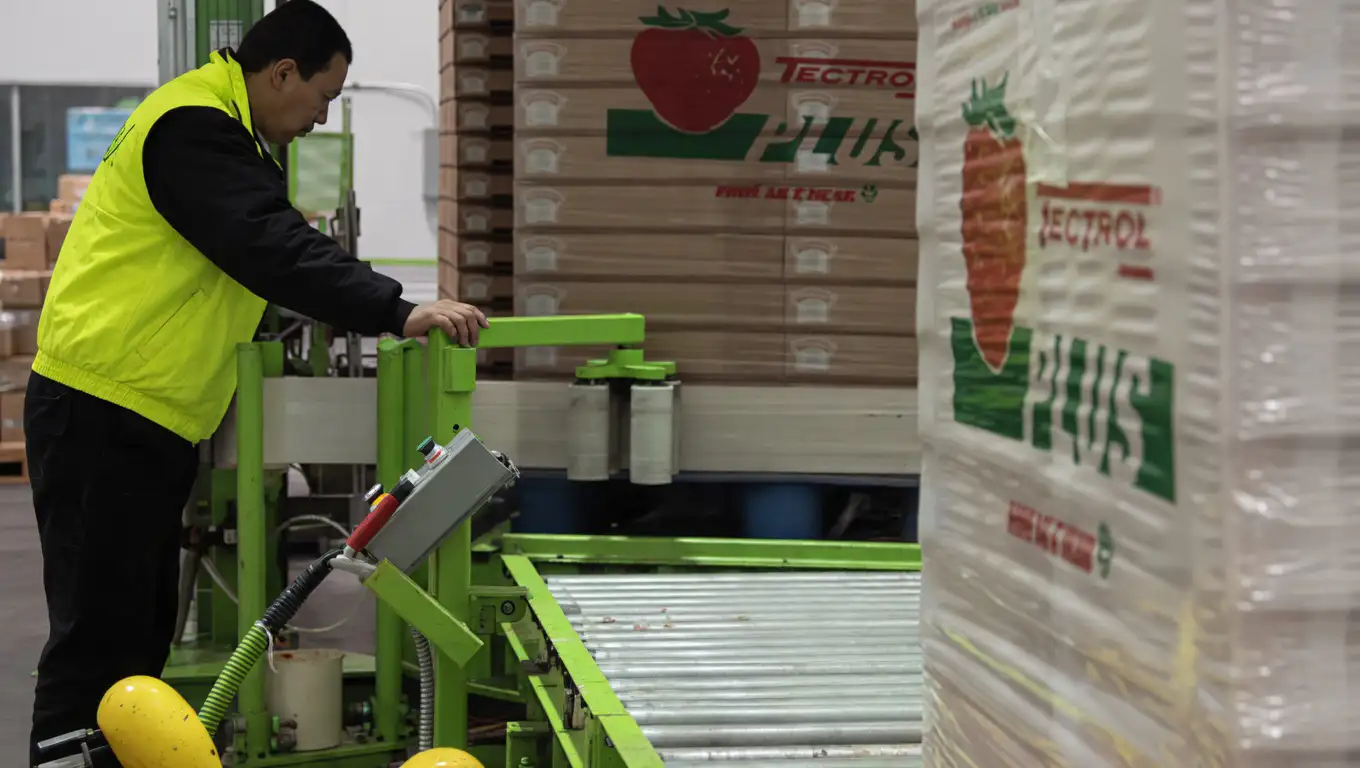
The Tectrol Service Network provides shippers with customized materials and equipment to ensure the efficient and consistent application of the Tectrol® process. TransFresh technicians continually monitor equipment and service techniques at each shipper location and throughout each season, with machines calibrated to deliver CO2 atmospheres specific to fruit variety and pallet volume. The Tectrol Service Network routinely spot checks atmosphere arrivals at distribution centers (DC’s) nationwide. This comprehensive monitoring at both shipping and receiving points ensures that optimal Tectrol® levels are maintained within the sealed pallet bags.
5. When should the Tectrol® bag be removed?
5. When should the Tectrol® bag be removed?
Remove the bag upon arrival at DC.
6. Once the bag is removed, do the benefits of Tectrol® dissipate?
6. Once the bag is removed, do the benefits of Tectrol® dissipate?
With the bag removed at unload, berries treated with the Tectrol® Modified Atmosphere system during transit exhibit a significantly slower rate of deterioration compared to untreated berries. Data indicates a measurable “lag effect” occurs regarding post-transit fruit quality. By maintaining product appearance and extending shelf life, the system directly impacts retail performance. According to a recent study, a 7% reduction in the incidence of wet, leaky or decaying berries on display resulted in an 8.5% increase in weekly berry unit volume at the point of sale.
7. Do Tectrol® treated strawberries arrive warmer than non-treated strawberries that are shipped without a bag?
7. Do Tectrol® treated strawberries arrive warmer than non-treated strawberries that are shipped without a bag?
Typically, yes, in careful side-by-side studies comparing temperature profiles of strawberries loaded without Tectrol® (no bag) and with Tectrol®, the Tectrol® product averaged 2° F warmer upon arrival. However, during subsequent, post-arrival observations, the Tectrol®-treated fruit proved to have less mold and longer shelf life than the matched, non-treated fruit despite the temperature difference.
There are many factors which contribute to in transit warming of any perishable. For a full discussion of this issue, please visit our Resource Center article “Solving the Problem of In-Transit Warming” linked here:
8. Do Tectrol® treated berries arrive warmer than berries in a pallet cover, that is open at the bottom?
8. Do Tectrol® treated berries arrive warmer than berries in a pallet cover, that is open at the bottom?
No. The University of California at Davis demonstrated in real world shipments that temperatures inside bags without a seal warmed at comparable rates to Tectrol®.
9. What potential benefit will Tectrol have on my business and profits?
9. What potential benefit will Tectrol have on my business and profits?
The impact is economically significant. Now there’s an easy tool for evaluating your potential return on investment when including Tectrol with your program. Get your personalized Cost-Benefit Analysis in minutes:
10. Where can I get Tectrol?
10. Where can I get Tectrol?
Connect with us to locate Tectrol Suppliers, or to initiate a new program at your facility.